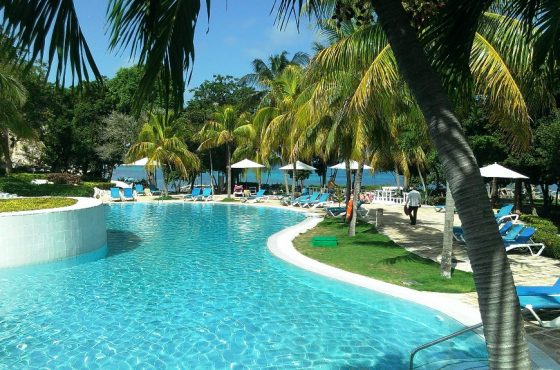
COSTA RICA Vacations
COSTA RICA: Your Prime Vacation and Ecotourism Destination
Amazing, fantastic, picturesque, exotic, interesting, peaceful, friendly … These words are used by people who went to Costa Rica for their vacations. Really, it is a paradise on earth. There are impressive volcanoes, mountain areas, rivers, lakes, and beaches all throughout the country. Costa Rica has bewilderingly diverse landscapes, flora, and fauna. Costa Rica contains about 6% of the world’s plant and animal species in an area of the combined size of the U.S. states of Vermont and New Hampshire.
Costa Rica, which means “Rich Coast”, is a country in Central America. In the north it borders Nicaragua and in the southeast Panama. To the west, there is the Pacific Ocean and to the east, the Caribbean Sea. From rain forests, to dry tropical and temperate forests, to volcanoes, to Caribbean and Pacific beaches, to high mountains, and marshy lowlands.
By Constitution, Costa Rica abolished its army permanently in 1949. It is the only Latin American country included in the list of the world’s 22 older democracies. Costa Rica has consistently been among the top Latin American countries in the Human Development Index, ranked 62nd in the world in 2010, and is cited by the UNDP as one of the countries that have attained much higher human development than other countries at the same income levels. The country is ranked third in the world, and first among the Americas, in terms of the 2010 Environmental Performance Index.
Climate
Costa Rica’s seasons are defined by how much rain falls during a particular period and not to the four seasons in the Northern Hemisphere. Because Costa Rica is located between eight and 12 degrees north of the Equator, the climate is Tropical year round. However, the country has many microclimates depending on elevation, rainfall, topography, and by the geography of each particular region. Humidity is also higher on the Caribbean side than on the Pacific side. The mean annual temperature on the coastal lowlands is around 27°C, 20°C in the main populated areas of the Central Cordillera, and below 10°C on the summits of the highest mountains.
The year can be split into two periods, the dry season known to the residents as summer, and the rainy season, known locally as winter. The “summer” or dry season goes from December to April, and “winter” or rainy season goes from May to November, which almost coincides with the List of Atlantic hurricane seasons, and during this time, it rains constantly in some regions. The location receiving the most rain is the Caribbean slopes of the Central Cordillera mountains with an annual rainfall of over 5000 mm.
Ecotourism
Costa Rica is one of the world’s most popular destinations for eco-tourists because of its biodiversity. Ecotourism draws many tourists to Costa Rica to visit the extensive national parks and protected areas around the country. Costa Rica was a pioneer in this type of tourism, and the country is recognized as one of the few with true ecotourism. In terms of the 2011 Travel and Tourism Competitiveness Index, Costa Rica ranked 44th in the world and second among Latin American countries after Mexico. Costa Rica ranks sixth worldwide in the natural resources pillar.
Flora and fauna
Costa Rica is world famous for having an incredibly high level of biodiversity throughout its tropical forests (this covers what you may hear referred to as rain forests, cloud forests, and dry forests). It has been stated in various places that Both tropical plant and animal species abound in Costa Rica. With 25% of the country being national parks and protected areas, there are still many places you can go to see the abundant wildlife and lush vegetation of the country. Just like anywhere, the farther you get off the beaten path, the more likely you are to see a wide variety of flora and fauna.
Some of the more impressive plants range from huge ficus trees with epiphytes abounding on their limbs to approximately 1500 different orchids.
The animals are equally as impressive, whether it’s a jaguar (the largest cat in the New World), the ever-elusive Margay, or the wonderful birds like the green or scarlet macaws (
lapas in Costa Rican Spanish.) The amphibians are also quite impressive; the poison dart frogs with their bright colors are bound to catch your attention, or the giant cane toads. There are tropical mammals such as monkeys, sloths, tapirs, and wild cats as well as an amazing assortment of insects and other animals. There are many birds (both migratory and resident) – more on that below.
There is such biodiversity in Costa Rica not only because it’s a land bridge between North and South America, but also because the terrain is so varied and there are weather patterns moving in from both the Pacific and Atlantic/Caribbean.
Volcanoes
Costa Rica is one of the most seismological active countries in the western hemisphere, and as a result several volcanoes have sprouted over the years- most notably volcanoes Poas, Irazu, and Arenal.
Beaches
There are many beautiful beaches – most of the popular ones are on the Pacific side but the Caribbean has many excellent beaches as well. Costa Rica is a country with an extraordinary wealth of things to do, but regardless of your travel interests, you’re going to want to spend time at one of the country’s great beaches. The lion’s share of beach tourism is concentrated on the Pacific side, in the Central Pacific region near San José, the Nicoya Peninsula, and in the dry tropical forests of Guanacaste. Less touristed, but no less beautiful are the beaches in the tropical rainforest of the southern Pacific coast near Corcovado National Park, or on the exotic, Rastafarian, eco-tourism paradise of the Caribbean side. While some of the best beach vacations will be found on tiny quiet beaches off the beaten path, or even at exclusive resorts, there are some country’s biggest and most popular beach destinations such as Corcovado, Dominical, Playa Grande and others.
Rafting
Costa Rica is one of the countries with more rivers per square kilometer than anywhere else in the world. Anywhere you go you will find some kind of float trip to enjoy nature from a very unique point of view. For many years, the rafting Mecca of Costa Rica was Turrialba, a large town embedded in the mountains near the Reventazon and Pacuare Rivers, on the Caribbean slope of Costa Rica. Second in popularity was always the Sarapiqui River shed which pushed the opening of rafting companies near the Arenal Volcano. Then, rivers such as the Penas Blancas (now dammed) and Toro started delighting rafting enthusiasts in the northern slopes of the country. On the Pacific slope is the river with the largest volume, El General. This river is famous for multi-day adventures and for being an incredible playground for kayakers.
Surfing
Costa Rica has many surfing hotspots. The best time of year to surf is from November – August. The Pacific coast, particularly in the Central Pacific and Guanacaste, has some of the best surfing in Central America. In the Guanacaste there are several beaches to choose from if you intend to go surfing. Among them, Playa Negra and Playa Grande are two stand out breaks. Playa Negra breaks over a shallow lava reef producing fast hollow waves for advanced surfers only. Playa Grande is the most consistent break in the area with surfable conditions most days of the year. It breaks over a sandy bottom and is good for beginner and experienced surfers.
Golfing
Costa Rica is also know as a haven for some of the most lush, tropical golfing environments in the world. At any course, you can expect to an ensemble of exotic, indigenous animals; jungle; mountainous terrain; and a surreal, blue ocean painting a brilliant, seclusive experience. Courses are located in 3 major areas of Costa Rica: Guanacaste, San Jose and Mid Pacific. Due to road conditions, you should check the driving times between courses. There are many tournaments during the year that any traveler can participate in. Most courses offer shoe and club rentals.
Extreme Sports
Wind surfing in the Tilarán area is some of the best in the world. “Canopy tours” are very popular in Monteverde and Montezuma. These typically cost between $30-$50 depending on the company and involves using a series of zip-lines to travel between platforms attached to the trees, through and over the forest canopy. The person is secured with harnesses to the metal cords, as some go very high off the ground.
Simple but Wholesome Costa Rican Cuisine
The spiciness often associated with Latin America has typically originated in Mexico, most Costa Rican foods are not spicy, but, as they simmer in a large pot, the flavors are blended.
- Gallo pinto is a mixture of rice and beans with a little cilantro or onion thrown in. While more common at breakfast, it can also be served at lunch or dinner.
- Casado, which means married, is the typical lunch in Costa Rica, containing rice and beans with meat, chicken or fish, always served with salad and fried plantain.
- Plato del dia, is the ‘Plate of the Day’ and is often a Casado, but has the meat or fish selection of the day. Usually around 5.00 USD and includes a natural juice.
- Salsa Lizano is a mild vegetable sauce that has a hint of curry and is slightly sweet. It’s often referred to as Costa Rican ketchup. It tastes good on just about anything! Bring some home with you! You can find smaller sized bottles at any market.
Good, fresh fruit is abundant in variety and low in cost. The mango found in store in North America are much more fibrous and less sweet than the mangos found in Costa Rica. The fingerling bananas are much more creamy and less tart than the ones found in North America. Vegetarians will find it surprisingly easy to eat well in Costa Rica.
The beef cattle are raised on grass; the meat will taste differently from corn fed cattle. The cuts of meat at the local restaurants are also different. The taste of chicken is not discernibly distinct.
Book your vacation with Altair Travel!
For reservation and information please contact Altair Travel at 416-633-9404December 24, 2013/ altair / Caribbean Vacations
COSTA RICA: Your Prime Vacation and Ecotourism Destination
Amazing, fantastic, picturesque, exotic, interesting, peaceful, friendly … These words are used by people who went to Costa Rica for their vacations. Really, it is a paradise on earth. There are impressive volcanoes, mountain areas, rivers, lakes, and beaches all throughout the country. Costa Rica has bewilderingly diverse landscapes, flora, and fauna. Costa Rica contains about 6% of the world’s plant and animal species in an area of the combined size of the U.S. states of Vermont and New Hampshire.
Costa Rica, which means “Rich Coast”, is a country in Central America. In the north it borders Nicaragua and in the southeast Panama. To the west, there is the Pacific Ocean and to the east, the Caribbean Sea. From rain forests, to dry tropical and temperate forests, to volcanoes, to Caribbean and Pacific beaches, to high mountains, and marshy lowlands.
By Constitution, Costa Rica abolished its army permanently in 1949. It is the only Latin American country included in the list of the world’s 22 older democracies. Costa Rica has consistently been among the top Latin American countries in the Human Development Index, ranked 62nd in the world in 2010, and is cited by the UNDP as one of the countries that have attained much higher human development than other countries at the same income levels. The country is ranked third in the world, and first among the Americas, in terms of the 2010 Environmental Performance Index.
Climate
Costa Rica’s seasons are defined by how much rain falls during a particular period and not to the four seasons in the Northern Hemisphere. Because Costa Rica is located between eight and 12 degrees north of the Equator, the climate is Tropical year round. However, the country has many microclimates depending on elevation, rainfall, topography, and by the geography of each particular region. Humidity is also higher on the Caribbean side than on the Pacific side. The mean annual temperature on the coastal lowlands is around 27°C, 20°C in the main populated areas of the Central Cordillera, and below 10°C on the summits of the highest mountains.
The year can be split into two periods, the dry season known to the residents as summer, and the rainy season, known locally as winter. The “summer” or dry season goes from December to April, and “winter” or rainy season goes from May to November, which almost coincides with the List of Atlantic hurricane seasons, and during this time, it rains constantly in some regions. The location receiving the most rain is the Caribbean slopes of the Central Cordillera mountains with an annual rainfall of over 5000 mm.
Ecotourism
Costa Rica is one of the world’s most popular destinations for eco-tourists because of its biodiversity. Ecotourism draws many tourists to Costa Rica to visit the extensive national parks and protected areas around the country. Costa Rica was a pioneer in this type of tourism, and the country is recognized as one of the few with true ecotourism. In terms of the 2011 Travel and Tourism Competitiveness Index, Costa Rica ranked 44th in the world and second among Latin American countries after Mexico. Costa Rica ranks sixth worldwide in the natural resources pillar.
Flora and fauna
Costa Rica is world famous for having an incredibly high level of biodiversity throughout its tropical forests (this covers what you may hear referred to as rain forests, cloud forests, and dry forests). It has been stated in various places that Both tropical plant and animal species abound in Costa Rica. With 25% of the country being national parks and protected areas, there are still many places you can go to see the abundant wildlife and lush vegetation of the country. Just like anywhere, the farther you get off the beaten path, the more likely you are to see a wide variety of flora and fauna.
Some of the more impressive plants range from huge ficus trees with epiphytes abounding on their limbs to approximately 1500 different orchids.
The animals are equally as impressive, whether it’s a jaguar (the largest cat in the New World), the ever-elusive Margay, or the wonderful birds like the green or scarlet macaws (lapas in Costa Rican Spanish.) The amphibians are also quite impressive; the poison dart frogs with their bright colors are bound to catch your attention, or the giant cane toads. There are tropical mammals such as monkeys, sloths, tapirs, and wild cats as well as an amazing assortment of insects and other animals. There are many birds (both migratory and resident) – more on that below.
There is such biodiversity in Costa Rica not only because it’s a land bridge between North and South America, but also because the terrain is so varied and there are weather patterns moving in from both the Pacific and Atlantic/Caribbean.
Volcanoes
Costa Rica is one of the most seismological active countries in the western hemisphere, and as a result several volcanoes have sprouted over the years- most notably volcanoes Poas, Irazu, and Arenal.
Beaches
There are many beautiful beaches – most of the popular ones are on the Pacific side but the Caribbean has many excellent beaches as well. Costa Rica is a country with an extraordinary wealth of things to do, but regardless of your travel interests, you’re going to want to spend time at one of the country’s great beaches. The lion’s share of beach tourism is concentrated on the Pacific side, in the Central Pacific region near San José, the Nicoya Peninsula, and in the dry tropical forests of Guanacaste. Less touristed, but no less beautiful are the beaches in the tropical rainforest of the southern Pacific coast near Corcovado National Park, or on the exotic, Rastafarian, eco-tourism paradise of the Caribbean side. While some of the best beach vacations will be found on tiny quiet beaches off the beaten path, or even at exclusive resorts, there are some country’s biggest and most popular beach destinations such as Corcovado, Dominical, Playa Grande and others.
Rafting
Costa Rica is one of the countries with more rivers per square kilometer than anywhere else in the world. Anywhere you go you will find some kind of float trip to enjoy nature from a very unique point of view. For many years, the rafting Mecca of Costa Rica was Turrialba, a large town embedded in the mountains near the Reventazon and Pacuare Rivers, on the Caribbean slope of Costa Rica. Second in popularity was always the Sarapiqui River shed which pushed the opening of rafting companies near the Arenal Volcano. Then, rivers such as the Penas Blancas (now dammed) and Toro started delighting rafting enthusiasts in the northern slopes of the country. On the Pacific slope is the river with the largest volume, El General. This river is famous for multi-day adventures and for being an incredible playground for kayakers.
Surfing
Costa Rica has many surfing hotspots. The best time of year to surf is from November – August. The Pacific coast, particularly in the Central Pacific and Guanacaste, has some of the best surfing in Central America. In the Guanacaste there are several beaches to choose from if you intend to go surfing. Among them, Playa Negra and Playa Grande are two stand out breaks. Playa Negra breaks over a shallow lava reef producing fast hollow waves for advanced surfers only. Playa Grande is the most consistent break in the area with surfable conditions most days of the year. It breaks over a sandy bottom and is good for beginner and experienced surfers.
Golfing
Costa Rica is also know as a haven for some of the most lush, tropical golfing environments in the world. At any course, you can expect to an ensemble of exotic, indigenous animals; jungle; mountainous terrain; and a surreal, blue ocean painting a brilliant, seclusive experience. Courses are located in 3 major areas of Costa Rica: Guanacaste, San Jose and Mid Pacific. Due to road conditions, you should check the driving times between courses. There are many tournaments during the year that any traveler can participate in. Most courses offer shoe and club rentals.
Extreme Sports
Wind surfing in the Tilarán area is some of the best in the world. “Canopy tours” are very popular in Monteverde and Montezuma. These typically cost between $30-$50 depending on the company and involves using a series of zip-lines to travel between platforms attached to the trees, through and over the forest canopy. The person is secured with harnesses to the metal cords, as some go very high off the ground.
Simple but Wholesome Costa Rican Cuisine
The spiciness often associated with Latin America has typically originated in Mexico, most Costa Rican foods are not spicy, but, as they simmer in a large pot, the flavors are blended.
- Gallo pinto is a mixture of rice and beans with a little cilantro or onion thrown in. While more common at breakfast, it can also be served at lunch or dinner.
- Casado, which means married, is the typical lunch in Costa Rica, containing rice and beans with meat, chicken or fish, always served with salad and fried plantain.
- Plato del dia, is the ‘Plate of the Day’ and is often a Casado, but has the meat or fish selection of the day. Usually around 5.00 USD and includes a natural juice.
- Salsa Lizano is a mild vegetable sauce that has a hint of curry and is slightly sweet. It’s often referred to as Costa Rican ketchup. It tastes good on just about anything! Bring some home with you! You can find smaller sized bottles at any market.
Good, fresh fruit is abundant in variety and low in cost. The mango found in store in North America are much more fibrous and less sweet than the mangos found in Costa Rica. The fingerling bananas are much more creamy and less tart than the ones found in North America. Vegetarians will find it surprisingly easy to eat well in Costa Rica.
The beef cattle are raised on grass; the meat will taste differently from corn fed cattle. The cuts of meat at the local restaurants are also different. The taste of chicken is not discernibly distinct.
Book your vacation with Altair Travel!
For reservation and information please contact Altair Travel at 416-633-9404
Tags All Inclusive Caribbean VacationsCOSTA RICA Vacations
top